
CyberNEMO Featured in AIOTI Report on the EU-Funded IoT and Edge Computing Projects Landscape

AIOTI published the release 4 of the report on IoT and Edge Computing EU Funded Projects Landscape. The main objective of this report  is to provide the landscape of EU funded projects focusing on IoT and edge computing, which can be used to: 1) leverage on existing IoT and edge computing research and innovation activities in Europe, and 2) provide input to IoT and edge computing standardisation gap analysis activities.

In the AIOTI report “EU-funded research projects landscape on IoT and Edge Computing”, the CyberNEMO project is presented through several key categories of information. These include reference links to its official pages, a project abstract outlining its objectives and focus on end-to-end cybersecurity across the IoT–Edge–Cloud continuum, and its planned duration. The entry also highlights main IoT and Edge research challenges addressed by the project, such as zero trust architectures, privacy-preserving AI, federated security management, and secure lifecycle operations. Additionally, it describes CyberNEMO’s dissemination and standardization activities involving collaboration with major European and international organizations, its validation across critical infrastructure sectors like energy, healthcare, and fintech, and key thematic areas such as resilience, cyber threat intelligence sharing, and privacy-by-design principles.

Read More

Cybersecurity in the Computing Continuum – The CyberNEMO Challenge

In today’s hyperconnected world, the Computing Continuum (CC)—spanning IoT devices, edge computing, and cloud infrastructure—presents both unprecedented opportunities and complex cybersecurity challenges. The CyberNEMO project, funded by the European Union’s Horizon Europe programme, is tackling this head-on with an end-to-end cybersecurity approach that integrates risk analysis, ethics and regulatory governance and compliance.

The recently published deliverable D1.1 outlines the threat and ethics assessment conducted across four critical sectors:

  • Smart energy and water infrastructures

  • Secure media content supply chains

  • Healthcare systems

  • Smart farming and logistics

Each of the four trials serves as a living lab to validate CyberNEMO’s technologies:

  • Smart meters and EV charging stations are protected against ransomware and data breaches using Zero Trust Network Architecture (ZTNA) and AI-based anomaly detection.

  • Media content is securely produced and distributed using microservices, encryption, and federated learning.

  • Hospitals defend against insider threats and phishing attacks while ensuring personal and confidential data sharing in compliance with GDPR and other relevant regulations.

  • Smart farming systems use drones, IoT sensors, and blockchain to ensure traceability and cybersecurity in the olive oil supply chain

These trials demonstrate the scalability and adaptability of CyberNEMO across diverse sectors and regulatory environments

Using the MITRE ATT&CK framework, the project identified 44 unique threat types and over 100 functional and non-functional requirements, as well as 23 ethics and regulatory concerns and corresponding requirements. These threats and challenges range from credential theft and ransomware to data manipulation, ethics of AI and denial-of-service attacks.

At the heart of CyberNEMO is a meta-operating system (meta-OS) that orchestrates secure interactions across the CC. This system integrates:

  • Zero Trust Network Access (ZTNA): Every device, user, and service is treated as untrusted by default.

  • Federated Machine Learning (FML): Enables decentralized threat detection without compromising data privacy.

  • Secure Access Service Edge (SASE): Ensures secure connectivity across heterogeneous networks.

  • Digital Twins and Blockchain: Provide traceability, auditability, and resilience in supply chains 

This architecture is designed to be ethics-by-conception, modular, scalable, and interoperable, supporting a wide range of use cases and regulatory contexts

CyberNEMO is not just about technology, it’s about building a secure, ethical, and resilient digital future.

You can explore the official project page on the EU CORDIS portal or follow updates from the coordinating partner Synelixis 

Read More

4th General meeting Of CyberNEMO

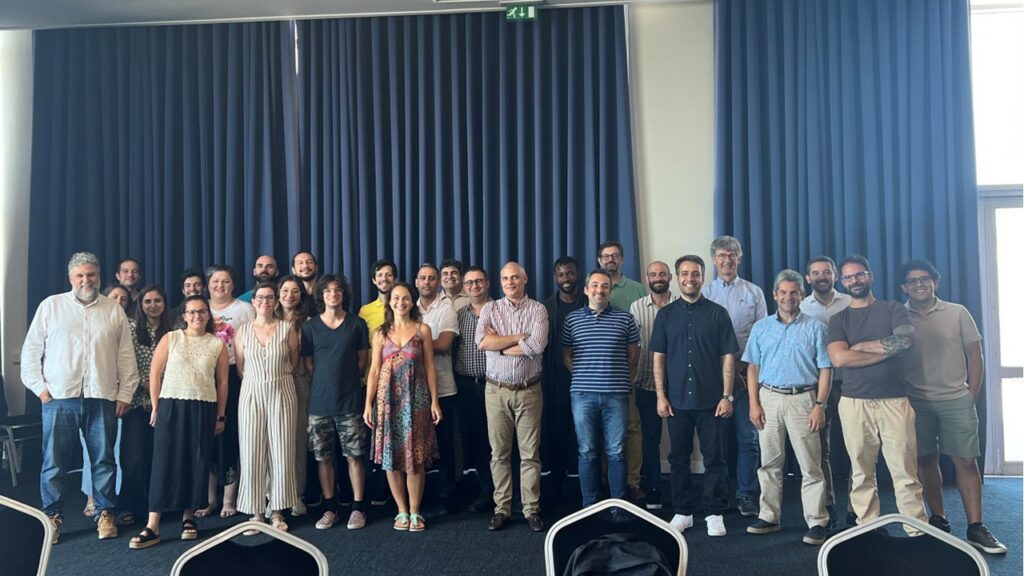
CyberNEMO partners have started a two-day Plenary Meeting that is in its 4th edition. The city of Lisbon has been the scenario of this venue. The project is along the 10th month of the project and the members have been evaluating the current status of CyberNEMO.

Duting the first day the partners talked about the availability of the components and the integrated version of the platform. Also the neccesity of testing the risk methodology as it is nearly finalised. Lastly the group discussed the ethics and regulatory aspects that need to be taken into account, but also next deliverables to be submitted.

Read More

CyberNEMO at SecSoft 2025 – Presenting Research on Verifiable Evidence for Zero Trust Networks

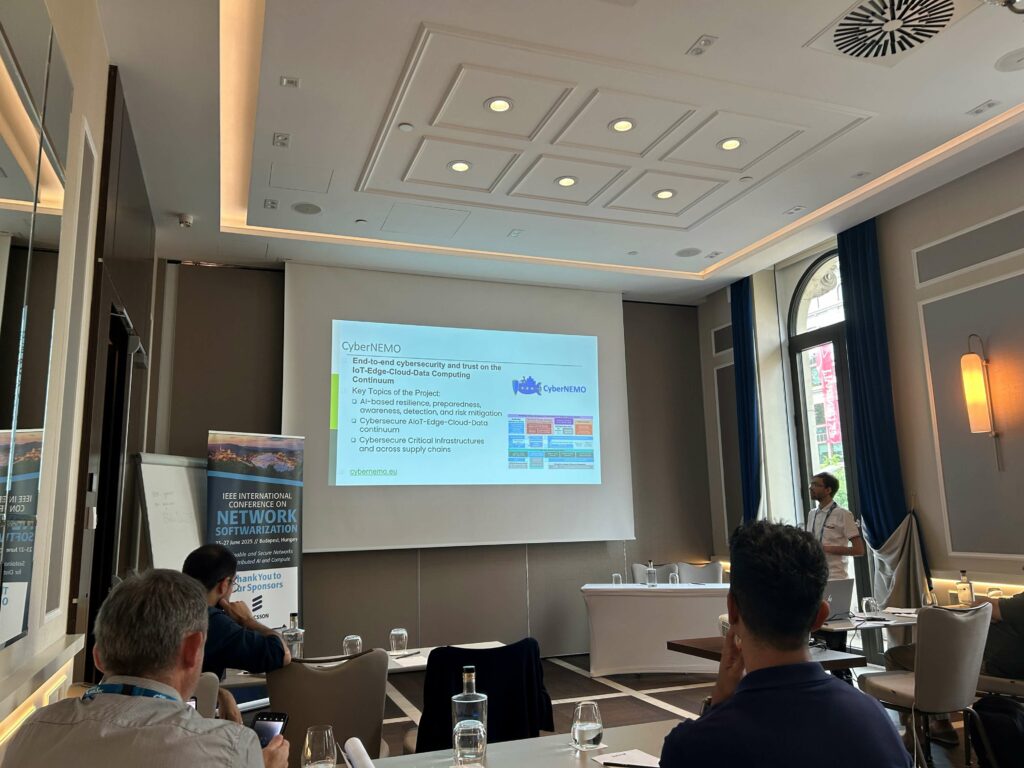
The CyberNEMO project was represented at the SecSoft 2025 workshop, held on June 27th in Budapest in conjunction with the IEEE NetSoft 2025 conference. The workshop brought together researchers, practitioners, and industry partners working on topics related to security, privacy, and trust in software-defined and AI-enabled network environments.

As part of the program, Ana Méndez, researcher from TID in the CyberNEMO consortium, presented the paper: “Transparent Notary Service: A Transparency Framework for Secure and Verifiable Network Evidence.”

This contribution introduces a lightweight, cryptographically verifiable notarization system that supports secure evidence handling and traceability in Zero Trust architectures. The work proposes a novel way to register and verify signed statements. such as access events, policy attestations, or network anomalies, using append-only logs and COSE-based signatures.

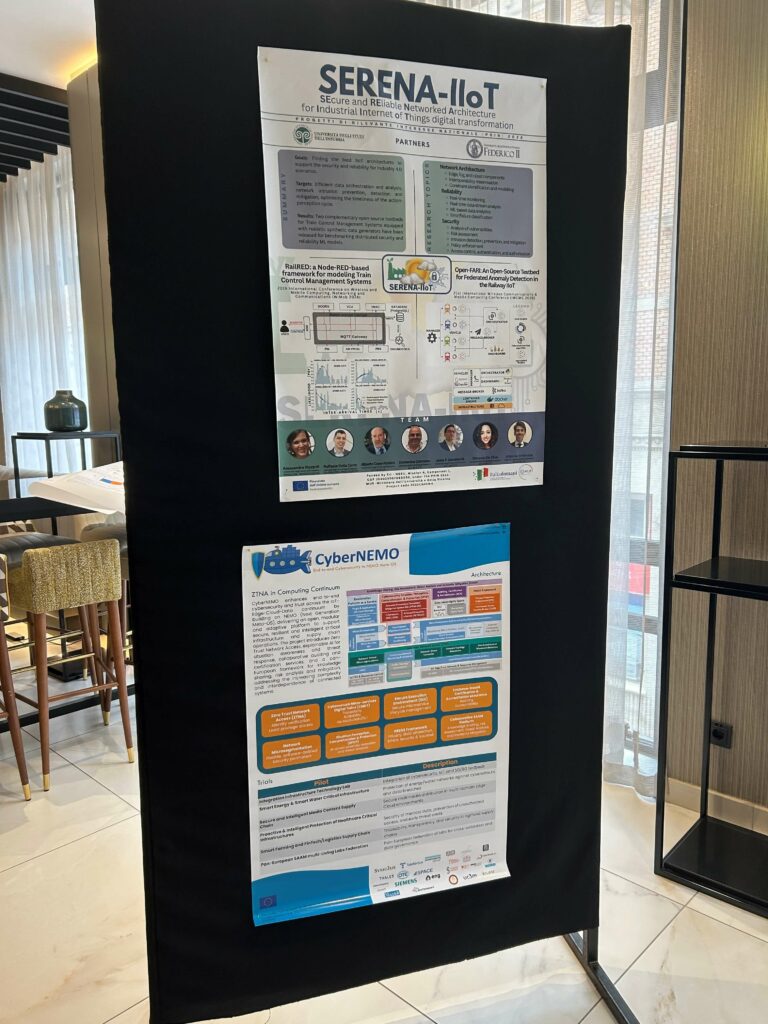
In addition to the paper, the CyberNEMO project poster was also presented at the event, outlining the project’s approach to trusted automation, distributed identity, and evidence-based orchestration in future 6G and cloud-native infrastructures.

The session was a valuable opportunity to share ongoing results, exchange ideas with other European and international initiatives, and highlight CyberNEMO’s commitment to building transparent and trustworthy network systems.

Read More

DNV Participates in CEN JTC 21 Artificial Intelligence Working Group Meeting in Norway

On May 12 to 15, 2025, Standards Norway hosted the meeting of the European standardization committee for Artificial Intelligence (JTC 21) in Norway. Among the attendees was DNV, CyberNEMO project partner. JTC 21 is a specialized committee dedicated to developing European standards for Artificial Intelligence. Its mission is to co-shape the framework for safe, reliable, and ethical AI technologies tailored to the unique needs of the European market and society and to support the EU AI act.  Working group 5 under JTC 21 is dedicated to standardization on Cybersecurity for AI systems and a separate standard document “Cybersecurity specifications for AI Systems” is in the making.

DNV’s participated in the meeting aligning its ongoing work in CyberNEMO with the latest developments in AI standardization. As AI continues to transform industries across Europe, the work of CEN JTC 21 becomes increasingly vital. By establishing harmonized standards, the committee supports the deployment of AI systems that are not only cutting-edge but also aligned with core European values and regulatory instruments such as the AI Act.

By: DNV

Read More

CyberNEMO Promotion through AIOTI Standardization Reports

CyberNEMO has commenced the interaction with AIOTI (Alliance for AI, IoT and Edge Continuum Innovation). The project has provided introductory information, including planned and developed use cases, to be featured in AIOTI’s standardization reports. These reports are circulated within the AIOTI community, the European Commission, and key Standards Developing Organizations (SDOs) such as ETSI, ISO/IEC, ITU-T, 3GPP, and IEEE.

CyberNEMO’s contributions offer insights into the landscape of research challenges and ongoing standardization efforts, at the intersection of AI, IoT, and edge computing. AIOTI’s mission is to lead and bridge innovation in these domains, supporting European deployment and fostering global cooperation, while safeguarding European values. More information about AIOTI and its standardization resources is available at: https://aioti.eu/resources-standardisation/

The initial positioning information refers to key research challenges, such as:

  • Zero Trust and Identity Management in dynamic IoT, edge and cloud environments
  • Runtime Threat Detection and Self-Healing Architectures
  • Secure and Privacy-Preserving AI at the Edge
  • Tailored Security for Constrained IoT Devices
  • Secure AI/ML Model Lifecycle at the Edge

In addition, CyberNEMO has outlined its expected activities in monitoring and collaborating with standardization bodies and initiatives, especially in the fields of AI-driven security, trusted edge computing, resilience, and cyber threat intelligence (CTI) sharing. This engagement will be supported by the active involvement of project partners participating in these organizations.

By: SYN

Read More

CyberNEMO Liaison Activities during “Data Week 2025” and the “1st One-Health Agri-Tech” Workshop in Athens

On May 27th and 28th, 2025, the Data Week 2025 workshop were organized in Athens, Greece. During the event, Ioannis Chrysakis from Netcompanyrepresented the CyberNEMO project, delivering a presentation that focused on key technological developments and the strategic liaison activities with other EU-funded projects. His talk highlighted the importance of fostering synergies across research initiatives, particularly in the domains of data value chains, AI applications, and sustainable agriculture.

Data Week 2025, organized by BDVA, took place on May 27–28 and revolved around the theme “Odyssey of AI: Navigating the Data Seas.” The event explored how artificial intelligence can unlock data value and emphasized the need for ecosystem collaboration to accelerate innovation, enhance competitiveness, and address societal challenges. CyberNEMO’s presence contributed to discussions on interoperability and knowledge transfer between data-centric EU projects.

In parallel, co-located with Data Week, the 1st One-Health Agri-Tech Workshop was organized by Synelixis, bringing together researchers, industry experts, and policymakers to explore cybersecure and smart agricultural solutions aligned with the Farm to Fork objectives of the European Green Deal. The workshop showcased cutting-edge technologies—including remote sensing, AI-powered analytics, and circular economy approaches—designed to enhance food security and promote environmental sustainability. During the event, Dr. Theodore Zahariadis (Synelixis) and Mr. Ioannis Chrysakis (Netcompany) realized liaison activities between a group of projectsthat participated at the  workshop, including CyberNemo, NESTLER, AGRIDATAVALUE and GEORGIA. These interactions promoted the sharing of best practices and the identification of joint opportunities for advancing sustainable cybersecure agri-tech solutions.

Overall, CyberNEMO’s active participation in both events reinforced its commitment to collaborative research and innovation, strengthening its connections with other EU initiatives and contributing to a broader European ecosystem focused on digital transformation and sustainability.

By: SYN

Read More

CyberNEMO aligns with standardization bodies, alliances, and associations

To ensure cutting-edge, secure, and future-proof solutions, CyberNEMO actively aligns with key European and international standards, alliances, and associations. These collaborations and references provide the foundation for our technological development, regulatory compliance, and seamless integration with global ecosystems.

From cybersecurity frameworks and IoT architectures to AI trustworthiness and next-generation connectivity, CyberNEMO draws from a wide range of standardization bodies and initiatives that shape the digital landscape.

➡️ Click here to explore the main organizations, alliances, and standardization efforts that guide and support the CyberNEMO project.

Read More

Safeguarding Critical Infrastructures: CyberNEMO’s Smart Energy & Water Trial

As digital technologies become more deeply embedded in our cities, the need to protect critical infrastructures, such as electricity grids and water systems, from cyber threats is more urgent than ever. In the CyberNEMO project, Trial 2, coordinated by ASM Terni, addresses this challenge through a real-world deployment in a multi-utility environment.


This trial evaluates how advanced cybersecurity solutions can protect smart energy and water systems from coordinated cyberattacks. From securing smart meters and EV charging infrastructure to protecting photovoltaic (PV) plants, power quality analyzers, and water pumps, Trial 2 replicates realistic threat scenarios with critical implications.

What makes this trial particularly relevant is its focus on:
• Cross-domain impact assessment, exploring how cyberattacks on the electricity network could disrupt water systems.
• Real-time monitoring, using data from PMUs, PQAs, and firewall logs to detect anomalies and simulate coordinated threats.
• Privacy-by-design, ensuring sensitive data collected via smart meters or firewalls remains anonymized and protected under GDPR.

All collected datasets are structured, validated, and governed under a strict data management framework, supporting both technical research and ethical responsibility. ASM’s infrastructure enables a practical and scalable setup, serving as a living testbed for advancing Europe’s digital resilience.

By ASM

Read More

CyberNEMO: Building a Responsible and Resilient Data Ecosystem for Europe’s Digital Future

As Europe’s digital infrastructure grows more complex—linking IoT, Edge, Cloud, and AI technologies—ensuring the ethical, secure, and sustainable management of data has never been more critical. In the CyberNEMO project, this responsibility is not just a technical necessity—it’s a guiding principle.


CyberNEMO adopts a robust, forward-looking Data Management Strategy designed to support innovation while fully respecting data privacy, cybersecurity, and FAIR principles (Findable, Accessible, Interoperable, Reusable). This approach enables the project to handle a wide range of data, from real-time IoT sensor streams to penetration testing logs and AI training datasets, while promoting transparency and reusability.


Key highlights of the strategy include:
• Use of trusted, secure repositories (e.g., EOSC, Zenodo) with persistent identifiers and standard metadata for traceability.
• Full alignment with GDPR and ethical AI frameworks, using anonymization, pseudonymization, and multi-layered security safeguards.
• Promotion of Open Science, including open access to peer-reviewed publications, AI/ML models, and experimental results.
• A structured and evolving data lifecycle that adapts to emerging risks, standards, and stakeholder feedback.

CyberNEMO not only ensures responsible data stewardship within the project but also creates a replicable model for European research and innovation. By combining technical excellence with ethical governance, CyberNEMO is helping shape a secure and trustworthy digital future.

By ASM

Read More