Cybersecurity for Smart Healthcare

Medical University of Plovdiv, Bulgaria was established in 1945. It includes the Faculties of Medicine, Dental medicine, Pharmacy, Public Health, a Department of Languages and Specialized training, a medical college and six University Hospitals. Facilities include laboratories, clinics and units for diagnostics and treatment, research activities and training of students. Every year both Bulgarian and foreign students are trained at the Medical University of Plovdiv. Medical University of Plovdiv is organizing and leading the postgraduate specialization in all medical specialties and is also providing education at above 10 Master and 30 PhD programs.


MUP does not has IT specialists that are involved into the information systems managing therefore MUP works in collaboration with XGILITY LIMITED (XGL) which is actively contributing its expertise to the CyberNEMO project. The team involved in CyberNEMO project is dealing with Smart Healthcare Critical Infrastructure – examines real-world vulnerabilities across hospitals, medical centres, and national healthcare data flows, where cloud, edge, and IoT devices all play a role in processing and storing sensitive health information. MUP is leading a trial focused on: Authentication and authorization protection, ensuring that unauthorized users cannot access or manipulate sensitive patient records, financial claims, or hospital logistics.
The main objective is to ensure healthcare system resilience, where hospitals, ministries, and practitioners share knowledge on threats, zero-day vulnerabilities, and mitigation practices to strengthen collective defense.

Read More

CyberNEMO Presented at CONASENSE Workshop – WPMC 2025

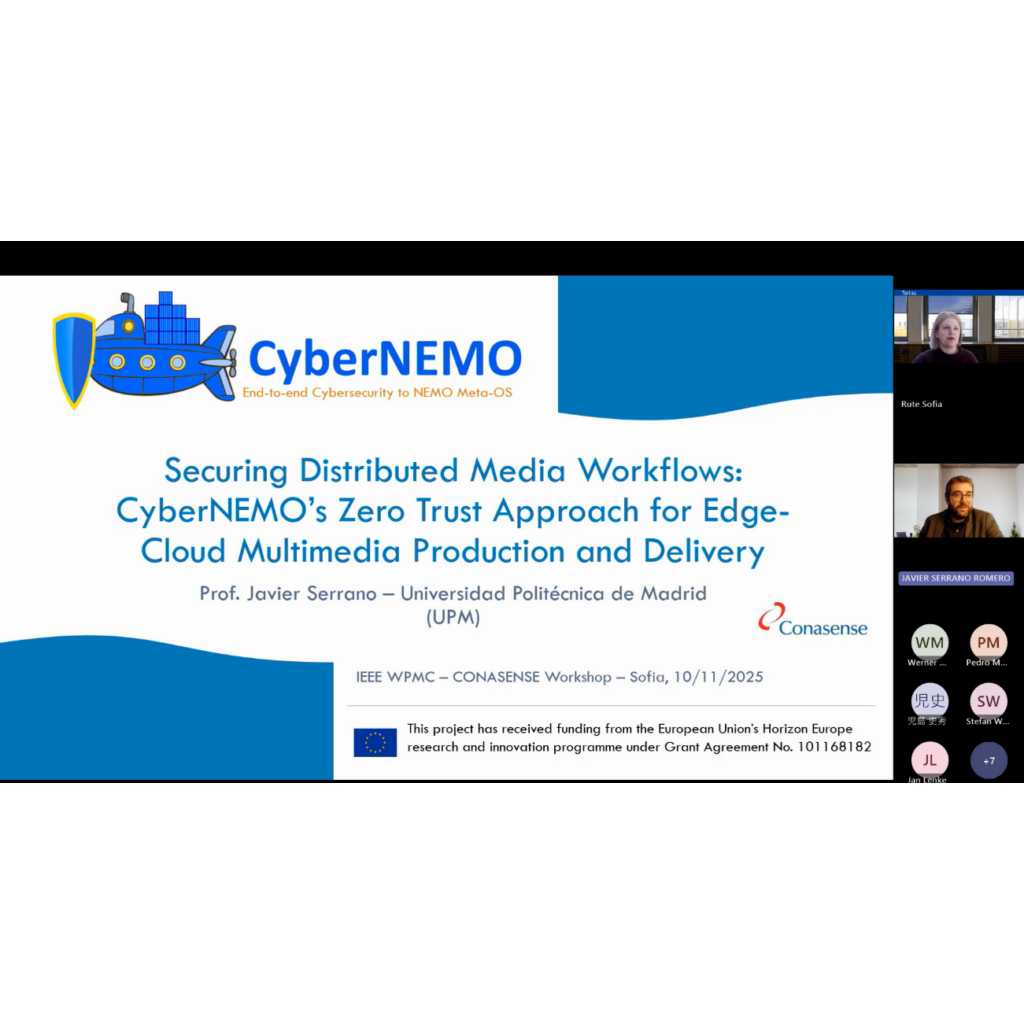
On November 10, 2025, the CyberNEMO project was featured at the CONASENSE Workshop, held in Sofia (Bulgaria) as part of the 28th International Symposium on Wireless Personal Multimedia Communications (WPMC 2025).

Javier Serrano, from the Universidad Politécnica de Madrid (UPM) and Technical Programme Chair of the workshop, delivered an invited talk titled:
“Securing Distributed Media Workflows: CyberNEMO’s Zero Trust Approach for Edge-Cloud Multimedia Production and Delivery.”

The presentation introduced CyberNEMO’s vision to bring end-to-end security and trust to the Edge–Cloud–IoT computing continuum, by means of an open-source metasystem for resilience, threat detection, and risk mitigation. The talk focused on the UPM-led media trial, which validates CyberNEMO’s solutions in the context of real-time, distributed content production and delivery.

Two real-world scenarios were presented:

  1. Collaborative content production, where IoT-based media is captured and processed over edge and cloud.
  2. Secure content distribution, ensuring low-latency and protected delivery to end users.

CyberNEMO applies Zero Trust principles, AI-powered intrusion detection, and federated orchestration to safeguard these workflows while maintaining performance and scalability.

The session concluded with an open discussion on the applicability of CyberNEMO’s architecture to other domains such as health, mobility and critical infrastructure, and its relevance for future 6G security paradigms.

CyberNEMO thanks the CONASENSE community for the opportunity to contribute to this forward-looking dialogue.

Read More

Maggioli: Evolving Through Digital Innovation

Company Profile and Evolution

Maggioli’s history spans over a century, originating as a publishing and printing company. This foundation in knowledge dissemination set the stage for a significant evolution towards digital, which began in 1988 with the establishment of the Maggioli Informatica Business Unit. This marked the company’s strategic entry into the Information and Communications Technology sector, focusing on the development of software, services, and projects for Digital Transformation.

Today, Maggioli is a major player in the ICT market. The Group employs over 3,000 people across more than 70 offices in Italy and abroad, with a technical-commercial presence in Spain, Greece, Belgium, and Colombia. This international scale supports a large and diverse client base of over 45,000 customers. A majority of these clients (72%) are in the public sector, giving the company extensive experience in serving governmental and administrative bodies.

Digital Transformation represents the core of Maggioli’s business, accounting for 86% of its activities. The Group’s consolidated turnover for 2024 is projected to exceed €400 million, reflecting a consistent growth strategy.

Focus on Research and Development

Research and Development is a central component of Maggioli’s strategy. The company has a team of over 100 people dedicated to R&D, located primarily in Italy and Greece. This team is currently engaged in over 30 active research projects across various innovative domains.

Among these dedicated research areas is Cyber and Physical Security, which aligns directly with the objectives of the CyberNEMO project. This focus on security complements the company’s broader expertise in areas such as Smart Cities, Industry 4.0, and Sustainable Energy, positioning Maggioli at the forefront of European innovation initiatives.

Maggioli’s Role in CyberNEMO

Within CyberNEMO, Maggioli holds a significant leadership role, guiding the overall strategy for the development of the project’s core security technologies.

The company’s responsibilities include leading the practical development of the project’s frontline cyber defenses, such as cloud-native intelligent firewalls and secure domain name systems. Additionally, Maggioli is responsible for the work on Explainable Artificial Intelligence (XAI). This research is critical for ensuring that the advanced AI tools developed in the project are transparent and trustworthy for security operators in real-world scenarios.

Maggioli’s established expertise and dedicated R&D capabilities provide a strong foundation for its contributions to the CyberNEMO project.

Read More

XGL in CyberNEMO

XGL (Xgility) is an innovative solutions provider and research-oriented IT company headquartered in Dublin, Ireland. Bringing together a highly skilled and diverse team of researchers, consultants, and IT specialists, XGL delivers a comprehensive range of services and solutions tailored to the needs of both industry and research partners. The company is distinguished by its agility, technical expertise, and forward-looking approach to technology adoption.

XGL’s core competencies span software development, IT outsourcing, AI-driven decision support systems, cybersecurity expertise, IT consulting, training, and advanced data and document management. Building on its innovation-driven approach, the company is also exploring emerging technologies such as virtual agents and large language models (LLMs) to enhance digital services, automation, and human–machine collaboration. By combining cutting-edge research with hands-on experience in the deployment and management of complex IT solutions, XGL supports organizations in their digital transformation journeys. With a strong emphasis on reliability, scalability, and adaptability, XGL has established itself as a trusted partner capable of addressing diverse technological and business challenges.

Beyond its service portfolio, XGL actively participates in research and innovation through EU-funded projects, where it contributes to the advancement of IT infrastructures, interoperability, and digital resilience. Its longstanding involvement in European research initiatives highlights the company’s ability to bridge the gap between academic innovation and industrial application, translating research outcomes into market-ready solutions through a strong commitment to research-to-market dissemination.

Within the CyberNEMO project, XGL plays a pivotal role by leading Task 5.1: Open Data Management Plan & Trials Set-up and Task 5.4: Smart Healthcare Critical Infrastructures Validation, where it provides guidelines for data management in CyberNEMO and supports the MUP pilot with technical expertise. In addition, XGL contributes to Task 3.2: Intrusion Prevention/Detection/Mitigation DSS (IPDM-DSS) and Task 3.4: Privacy Protection Enforcement (PPE). The company also leads the development of a semantically enhanced Countermeasures Repository, designed to identify and match countermeasures against emerging and existing critical infrastructure threats.

Through its expertise in cybersecurity, AI-driven solutions, and emerging virtual agent technologies, XGL reinforces the collaborative and interdisciplinary character of CyberNEMO. The company remains dedicated to driving innovation, enabling digital transformation, and delivering high-quality IT solutions that create long-term value for stakeholders across both research and industry.

www.xgility.eu

Read More

Netcompany SEE & EUI in CyberNEMO

Netcompany SEE & EUI is a leading European IT Solutions and Services company with proven expertise in conceptual system architecture and system design, advanced application development and integration / communication services, information portal management, communication services, and project management, offering innovative and added-value solutions of the highest quality to a wide range of international and national public and private organizations.

Furthermore, Netcompany SEE & EUI based on its expertise is responsible for undertaking and coordinating the activities of CyberNEMO cybersecure federated ZT architecture definiton. At the same time, Netcompany SEE & EUI leads the activities of the Cybersecurity & Privacy by Collaboration Work Package having the responsibility to design and implement Strategies & Tools for cooperative remediation and mitigation such as the Knowledge Sharing, risk Assessment, threat Analysis and incidents Mitigation (SAAM) framework. Lastly, Netcompany SEE & EUI leads the Exploitation activities of CyberNemo aiming to ensure effective communication and outreach of project results, focusing on engaging stakeholders and identifying opportunities to exploit project outcomes.

Read More

CyberNEMO Strengthens Ties with European Cybersecurity Projects to Accelerate Joint Innovation

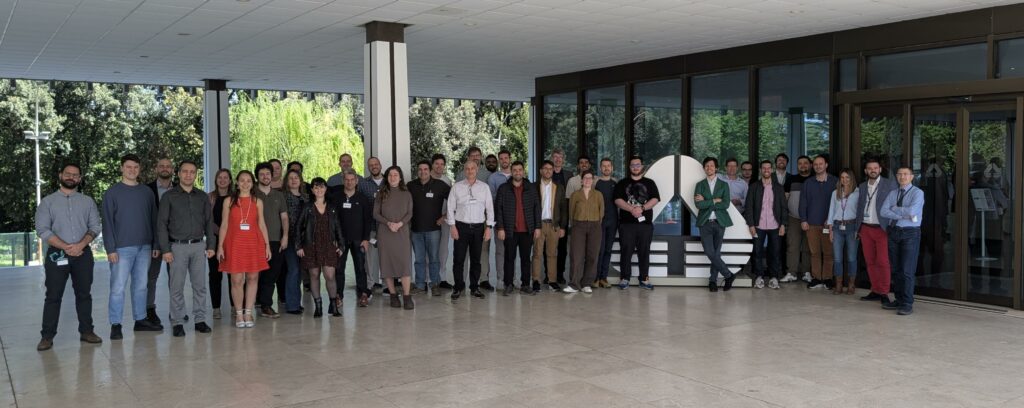
The CyberNEMO project joined forces with INTACT, CASTOR, and MIRANDA for the first meeting of the European Cybersecurity Cluster, held on October 6th. This collaborative exchange was designed to identify synergies, explore joint opportunities, and align shared goals among the participating projects. The meeting brought together experts and coordinators from all four initiatives, each dedicated to advancing Europe’s cybersecurity resilience through cutting-edge research, innovation, and real-world implementation.

CyberNEMO vision and objectives have been presented. Specifically, the project aims to enhance resilience, risk preparedness, awareness, detection, and mitigation in Critical Infrastructures and supply chains. The project delivers full-stack, end-to-end protection—from low-level Zero-Trust Network Access to human-AI explainable Situation Perception, Comprehension & Protection (SPCP) tools—alongside collaborative microservices for auditing, certification, and accreditation, and a pan-European platform for shared risk assessment, threat analysis, and incident mitigation (SAAM).

As the discussions progressed, participants identified several promising avenues for collaboration. They expressed strong interest in pursuing future joint calls and complementary research initiatives, while INTACT and CyberNEMO agreed to maintain their dialogue during their upcoming plenary meetings, which will take place concurrently at the same venue. Another key area of potential cooperation is standardization, where the exchange of expertise among projects could significantly accelerate the development of harmonized frameworks and enhance interoperability across the European cybersecurity landscape.

The meeting concluded with a shared understanding that collaboration is essential to advancing Europe’s cybersecurity landscape in an increasingly interconnected world.

Read More

CyberNEMO Featured in AIOTI Report on the EU-Funded IoT and Edge Computing Projects Landscape

AIOTI published the release 4 of the report on IoT and Edge Computing EU Funded Projects Landscape. The main objective of this report  is to provide the landscape of EU funded projects focusing on IoT and edge computing, which can be used to: 1) leverage on existing IoT and edge computing research and innovation activities in Europe, and 2) provide input to IoT and edge computing standardisation gap analysis activities.

In the AIOTI report “EU-funded research projects landscape on IoT and Edge Computing”, the CyberNEMO project is presented through several key categories of information. These include reference links to its official pages, a project abstract outlining its objectives and focus on end-to-end cybersecurity across the IoT–Edge–Cloud continuum, and its planned duration. The entry also highlights main IoT and Edge research challenges addressed by the project, such as zero trust architectures, privacy-preserving AI, federated security management, and secure lifecycle operations. Additionally, it describes CyberNEMO’s dissemination and standardization activities involving collaboration with major European and international organizations, its validation across critical infrastructure sectors like energy, healthcare, and fintech, and key thematic areas such as resilience, cyber threat intelligence sharing, and privacy-by-design principles.

Read More

Eclipse Foundation in CyberNEMO

The Eclipse Foundation provides our global community of individuals and organizations with a mature, scalable, and business-friendly environment for open source software collaboration and innovation. The Foundation is home to the Eclipse IDE, Jakarta EE, and over 415 open source projects, including runtimes, tools, and frameworks for cloud and edge applications, IoT, AI, automotive, systems engineering, distributed ledger technologies, open processor designs, and many others. The Eclipse Foundation is an international non-profit association supported by over 350 members, including industry leaders who value open source as a key enabler for their business strategies. In the context of community building, sustainability and open source, the Eclipse Foundation has two decades of experience managing the governance of complex technology initiatives and multi-vendor organizations, making it the ideal organization to help manage projects where academia and the private sector converge. Its commitment to transparency, vendor-neutrality, and industrial-friendly ecosystem makes the foundation an ideal starting point for an open source project. The Eclipse Foundation has 10 years of involvement in EU research programs. We help organizations to successfully create, publish, and sustain their open source software platform, making the results of the research projects available for commercial or public exploitation.

In CyberNEMO, Eclipse is leading the work package dedicated to the dissemination, communication and exploitation, with particular focus on a specific task aimed to implement the CyberNEMO open source strategy, fostering active engagement with developer communities and early adopters. Working closely with CyberNEMO consortium innovators, the task focuses on identifying relevant open source assets, developing a community-building strategy, and establishing good open source practices.

Read More

Smart Farming Meets Cybersecurity – CyberNEMO’s Role in Securing the Agri-Food Chain

As agriculture embraces digital transformation, the integration of IoT sensors, drones, blockchain, and AI is revolutionizing how food is produced, processed, and delivered. However, this digital leap also introduces new vulnerabilities. The CyberNEMO project is addressing these challenges through a dedicated trial focused on smart farming and agri-food supply chains.
The project explores how cybersecurity can enhance traceability, transparency, and trust in the production of organic olive oil—from the olive grove to the supermarket shelf.

The Use Case: From Tree to Table

The use case centers on the monitoring and auditing of organic olive oil production. This includes:

  • Growing conditions monitored by IoT sensors and drones

  • Harvesting and milling tracked via smart devices and robots

  • Bottling, storage, and transport secured through blockchain and digital twins

These technologies ensure that every step of the process is observable and verifiable, enabling stakeholders and consumers to trace the product’s journey and verify its quality.

However, the reliance on unattended, rural IoT devices introduces significant cybersecurity risks. Devices may be physically tampered with, infected with malicious firmware, or used as entry points for broader attacks 

From Cybersecurity to Trust and Sustainability

CyberNEMO’s approach goes beyond technical protection. It enables:

  • Accountability: Through audit logs and timestamped data

  • Transparency: Via blockchain-backed traceability

  • Resilience: With self-healing systems and secure federated learning

  • Compliance: With GDPR, the AI Act, and the Data Act

By embedding cybersecurity into the entire agri-food lifecycle, CyberNEMO ensures that digital farming is not only efficient but also trustworthy and sustainable.

Cybersecurity in agriculture is no longer optional—it’s essential. As food systems become smarter, they must also become more secure. CyberNEMO demonstrates how cutting-edge technologies can be harmonized with ethical and regulatory safeguards to protect both data and food integrity.

This trial offers a replicable model for cybersecure, transparent, resilient, trustworthy and ethical food supply chains, paving the way for a more sustainable agri-tech future.

Read More

Cybersecurity in the Computing Continuum – The CyberNEMO Challenge

In today’s hyperconnected world, the Computing Continuum (CC)—spanning IoT devices, edge computing, and cloud infrastructure—presents both unprecedented opportunities and complex cybersecurity challenges. The CyberNEMO project, funded by the European Union’s Horizon Europe programme, is tackling this head-on with an end-to-end cybersecurity approach that integrates risk analysis, ethics and regulatory governance and compliance.

The recently published deliverable D1.1 outlines the threat and ethics assessment conducted across four critical sectors:

  • Smart energy and water infrastructures

  • Secure media content supply chains

  • Healthcare systems

  • Smart farming and logistics

Each of the four trials serves as a living lab to validate CyberNEMO’s technologies:

  • Smart meters and EV charging stations are protected against ransomware and data breaches using Zero Trust Network Architecture (ZTNA) and AI-based anomaly detection.

  • Media content is securely produced and distributed using microservices, encryption, and federated learning.

  • Hospitals defend against insider threats and phishing attacks while ensuring personal and confidential data sharing in compliance with GDPR and other relevant regulations.

  • Smart farming systems use drones, IoT sensors, and blockchain to ensure traceability and cybersecurity in the olive oil supply chain

These trials demonstrate the scalability and adaptability of CyberNEMO across diverse sectors and regulatory environments

Using the MITRE ATT&CK framework, the project identified 44 unique threat types and over 100 functional and non-functional requirements, as well as 23 ethics and regulatory concerns and corresponding requirements. These threats and challenges range from credential theft and ransomware to data manipulation, ethics of AI and denial-of-service attacks.

At the heart of CyberNEMO is a meta-operating system (meta-OS) that orchestrates secure interactions across the CC. This system integrates:

  • Zero Trust Network Access (ZTNA): Every device, user, and service is treated as untrusted by default.

  • Federated Machine Learning (FML): Enables decentralized threat detection without compromising data privacy.

  • Secure Access Service Edge (SASE): Ensures secure connectivity across heterogeneous networks.

  • Digital Twins and Blockchain: Provide traceability, auditability, and resilience in supply chains 

This architecture is designed to be ethics-by-conception, modular, scalable, and interoperable, supporting a wide range of use cases and regulatory contexts

CyberNEMO is not just about technology, it’s about building a secure, ethical, and resilient digital future.

You can explore the official project page on the EU CORDIS portal or follow updates from the coordinating partner Synelixis 

Read More