The use of Explainable AI methods for monitoring assets, detecting cyberattacks, and suggesting mitigation actions

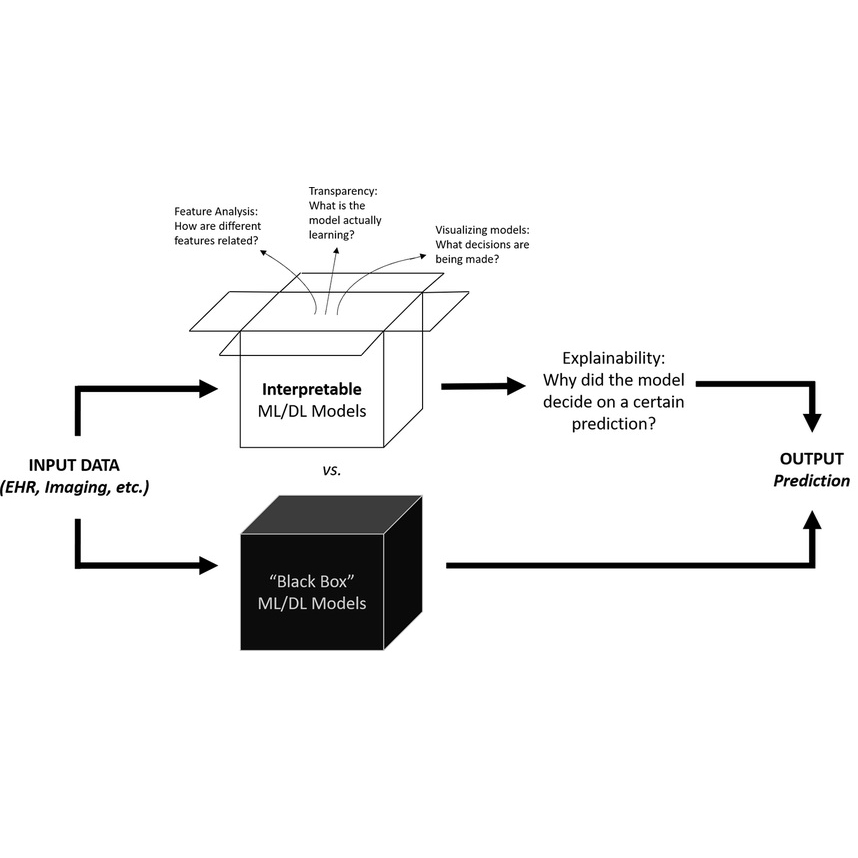
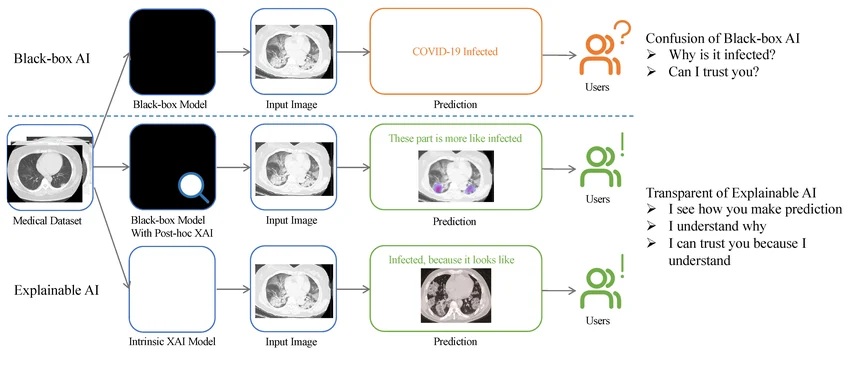
As cyberattacks become more frequent and complex, organizations are turning to Artificial Intelligence (AI) to defend their digital assets. Standard AI is incredibly fast at spotting patterns, but it often works like a “black box”—it might tell a security team, “This file is a virus,” or “there is a cyberattack going on from this IP addresss” without ever explaining why. For a security professional, a simple “Yes” or “No” isn’t enough. If the AI is wrong, it could block an important company document or block services that the company provides; if it’s right, the team still needs to know how the attacker got in to stop it from happening again. This is where Explainable AI (XAI) comes in.

What is Explainable AI (XAI)?

XAI is a set of tools and methods designed to make the “internal thought process” of an AI understandable to humans. In cybersecurity, XAI doesn’t just detect a threat; it provides a rational justification for its decision.

For monitoring assets and detecting attack instead of just monitoring for “bad” things, XAI helps security teams understand what “normal” looks like. If the AI flags a login attempt as suspicious, XAI can point to specific reasons: “The user is logging in from a new country” or “This account is suddenly accessing 2,000 files it never touched before.” XAI can generate maps or charts showing exactly where a network’s behavior deviated from the norm, helping humans spot the “smoking gun” quickly.

For suggesting mitigations XAI doesn’t just sound the alarm; it helps build the shield. By explaining the nature of the attack, it can suggest the best way to stop it.If the AI explains: “This is a Brute Force attack targeting the HR database,” the suggested action is clear: “Temporarily lock the targeted accounts and require a password reset.”

The Importance of the “User-in-the-Loop”

The most critical part of XAI is that it keeps a human—the User-in-the-Loop—at the center of the decision. Cybersecurity is high-stakes; a mistake could shut down a hospital’s network or a city’s power grid. XAI increases trust, facilitates collaboration and provides accountability.

  • Trust and Validation: When an AI can explain itself, a human expert can quickly verify if the alert is a real threat or a “false positive” (a mistake).
  • Collaboration: Humans bring “common sense” and context that AI lacks. For example, the AI might flag a large data transfer as an attack, but a human knows it’s just the annual company backup. XAI allows the human to see the AI’s logic, agree or disagree, and teach the system to be better next time.
  • Accountability: If something goes wrong, XAI provides a clear “paper trail” showing why a certain decision was made, which is essential for legal and safety audits.

The main differences between standard AI and explainable AI (XAI) are the following. In terms of output standard AI could mention that “High Risk is detected” but explainable AI would say “High Risk: Unusual data flow to an unknown IP is detected.” The human role is highly elevated in XAI from blindly trust or ignore the human to review evidence and take informed action. In addition, the learning process becomes stronger because instead of AI algorithms learning alone the human can provide feedback to refine the AI algorithms.

XAI transforms AI from a mysterious oracle into a transparent partner, ensuring that while the computer does the “heavy lifting” of data analysis, the human stays in control of the final defense strategy.

Read More

CyberNEMO SAAM: Building a Pan-European Cyber Shield for Critical Infrastructure

CyberNEMO SAAM is a pan-European Knowledge Sharing, risk Assessment, threat Analysis and incidents Mitigation collaborative platform designed to protect Critical Infrastructures (CIs) across Europe. Operating as the federated CTI exchange backbone of the broader CyberNEMO platform, SAAM serves as a pan-European CTI hub that collects, analysis, enriches, and distributes cybersecurity intelligence among interconnected infrastructure operators, national and cross-border cybersecurity authorities and communities. By centralising cyber threat data from diverse CI sectors including energy, transport, healthcare, and finance and structuring it around the widely adopted STIX 2.1 standard, SAAM creates a common operational picture that no single organisation could achieve on its own.

Modern cyber threats do not respect sector or national boundaries. A sophisticated attack on an energy grid can swiftly ripple into transport management systems or hospital networks, creating cascading failures that isolated, manually-processed intelligence cannot prevent. SAAM addresses this gap by positioning itself as the central nervous system of European CI cybersecurity, automatically correlating cross-sector incident patterns, attributing threats to known actors, and generating timely advisories for eligible partners. Governed by the most appropriate authority within the CyberNEMO ecosystem, and fully aligned with NIS2 compliance obligations, SAAM represents a significant step forward in building the collective resilience that Europe’s critical infrastructure communities urgently need.

SAAM delivers four tightly integrated capabilities. Cross-CI Knowledge Sharing enables the seamless exchange of CTI data across sector boundaries and national borders through secure Trusted Circles at Sectoral, National, Cross-Border, and Pan-European level utilizing interoperable standards such as STIX v2.1, TAXII 2.1 and Traffic Light Protocol (TLP) for controlled dissemination. SAAM’s Systemic Risk Analysis Engine applies automated analysis over incoming cyberthreat reports to score, correlate, and contextualise vulnerabilities and attacks. In addiiton, SRAE analysis contributes to the identification of coordinated attacks taking into account potential cascading effects. This contributes to SAAM’s enhanced State Awareness which gives operators and authorities a real-time, holistic view of the threat landscape across interconnected CI domains. Finally, SAAM’s Incident Mitigation translates enriched intelligence into actionable guidance, enabling CSIRTs and CI owners to coordinate responses swiftly and effectively before threats cascade across sectors.

Read More

What is a Network Socket? The Building Block of CyberNEMO Connectivity

In the complex architecture of the CyberNEMO meta-Operating System, ensuring secure and reliable communication across the computing continuum is paramount. While high-level security frameworks like Zero Trust Network Access (ZTNA) provide the overarching strategy, the actual heavy lifting of data exchange happens at a much more fundamental level: the network socket.

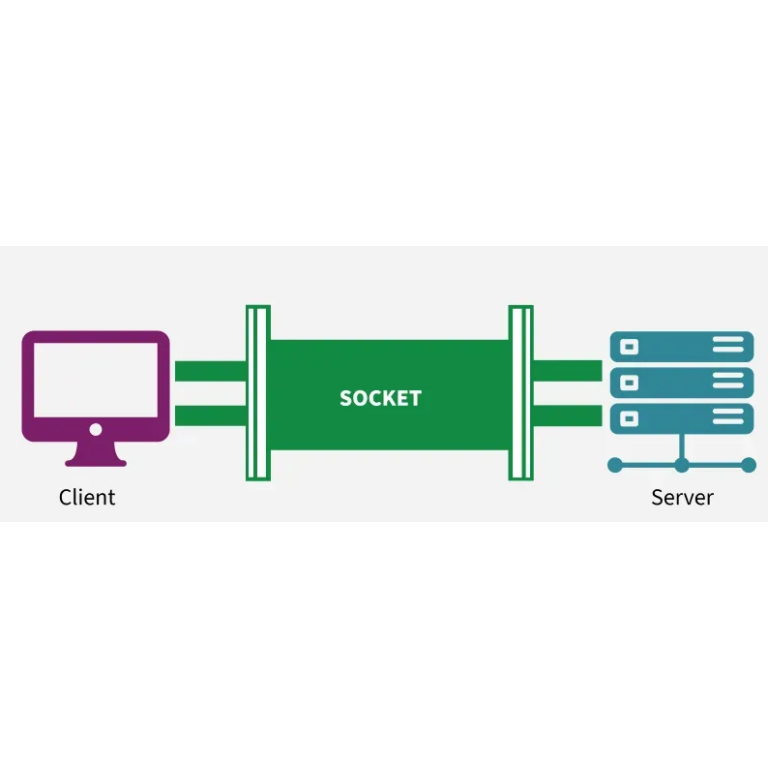
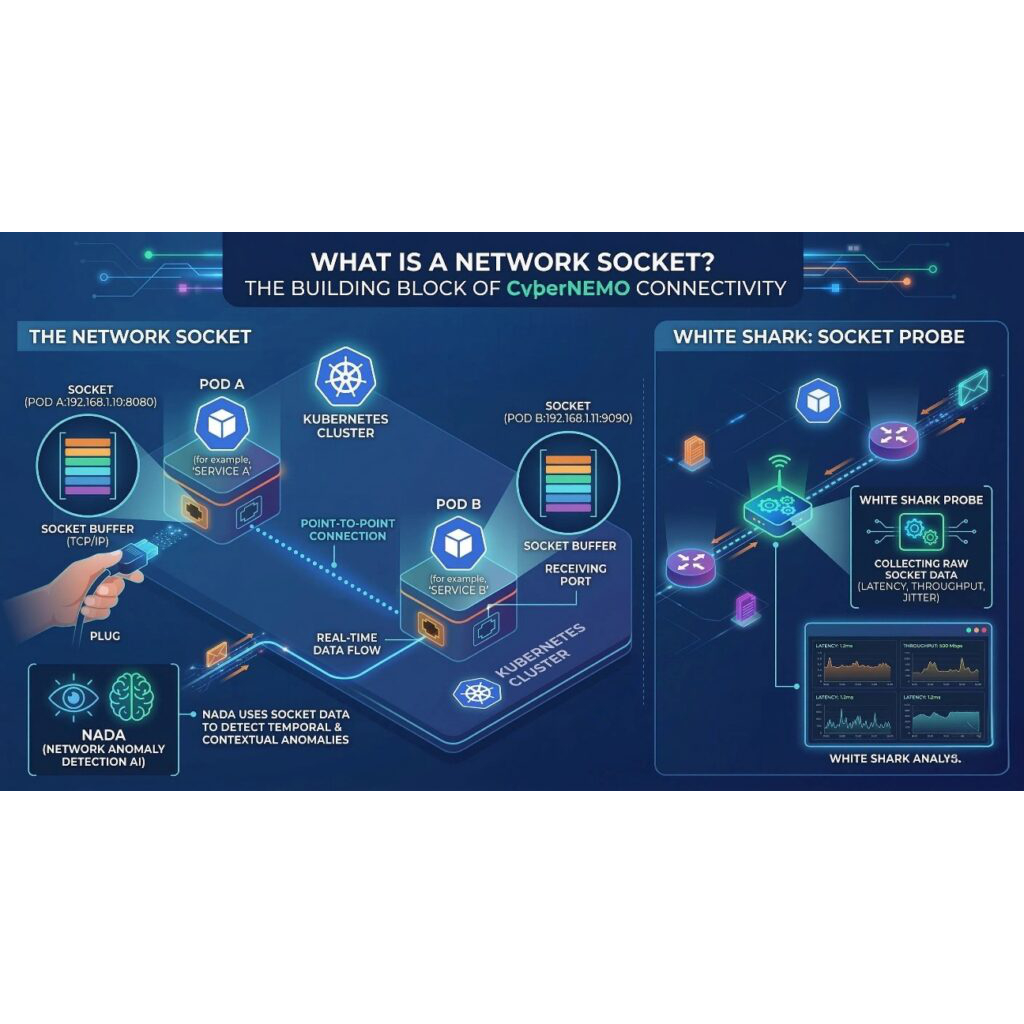
A network socket is essentially an internal endpoint for sending or receiving data at a single node in a computer network. Think of it as a virtual “plug” that allows two different processes—whether they are on the same machine or across the world—to talk to each other. In a Kubernetes (K8s) environment, which serves as the foundation for CyberNEMO’s deployment, sockets are the critical bridges between containerized microservices. They enable the point-to-point communication necessary for workloads to function as a unified system.

Why Sockets Matter for Network Measurement

Within the WP2 (Work Package 2), the focus is on “Cybersecurity and Privacy by Design”. To achieve this, we cannot rely on surface-level metrics. We need to measure real communication at the socket level. This is where components like White Shark come into play.

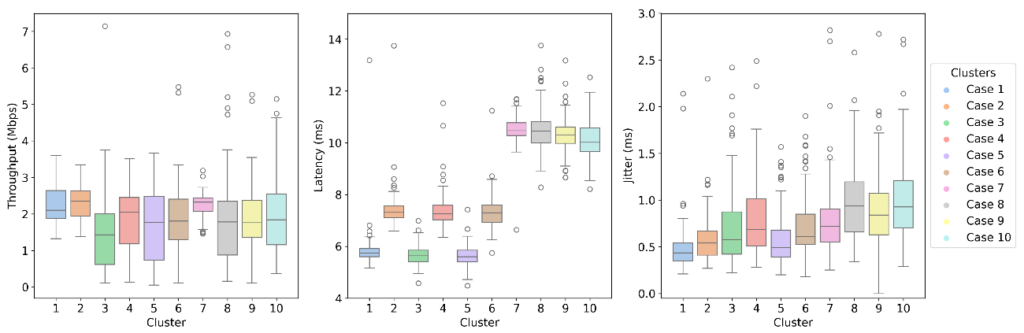
Originally developed for the NEMO project, White Shark is a specialized network probe designed to collect and retrieve high-fidelity network data. By tapping into socket communication, White Shark can measure point-to-point metrics—such as latency and throughput—directly between two endpoints. This provides a level of precision that traditional network monitors often miss, as it captures the actual data flow as seen by the applications themselves, rather than just the underlying infrastructure.

From Raw Data to Intelligence: The Role of NADA

Capturing socket-level data is only half the battle; the next step is making sense of it. In CyberNEMO, this data is fed into the Network Anomaly Detection AI (NADA). NADA’s purpose is to identify temporal and contextual anomalies—suspicious patterns in the network traffic that could indicate a security breach.

Read More

Mapping Cyber Vulnerabilities to MITRE ATT&CK for Critical Infrastructure Threat Detection

How CyberNEMO is bridging the gap between risk visibility and intelligent response

In today’s hyperconnected world, Europe’s critical infrastructures (CIs) — energy, transport, healthcare, and manufacturing — form the backbone of our digital society. Yet these same systems are among the most vulnerable targets

From ransomware attacks that paralyse hospitals to supply chain breaches rippling through industrial control systems, one reality stands out: we cannot defend what we cannot understand

Why Vulnerability Mapping Matters

Traditional vulnerability scanning stops at detection — identifying weak points without explaining how they might be exploited. But true cyber resilience requires context

By mapping vulnerabilities to the MITRE ATT&CK framework — the global reference for adversarial tactics, techniques, and procedures (TTPs) — defenders can see how attackers think and operate. Each vulnerability becomes a narrative of potential attack paths, not just a static CVE entry. 

By correlating technical weaknesses (CVE/CVSS) with ATT&CK techniques, CI operators can: 

  • Prioritise what matters most — focusing on vulnerabilities exploited by active adversaries.
  • Enhance detection logic — linking vulnerabilities to ATT&CK techniques like privilege escalation, lateral movement, or data exfiltration.
  • Enable AI-driven threat prediction — modelling how small weaknesses could evolve into full-scale attack chains.

Embedding AI Closer to the Threat Surface

CyberNEMO’s approach brings AI intelligence directly to the edge, transforming how vulnerabilities are monitored and analysed in distributed systems. 

By embedding AI in IoT gateways and edge devices, threat detection becomes continuous, adaptive, and privacy-preserving. These local models evolve with each new observed attack, strengthening defences autonomously and enhancing cross-domain resilience

This shift — from centralised analysis to distributed intelligence — is key to protecting the complex, hybrid environments that define modern critical infrastructure. 

From Zero Trust to Full-Stack Protection

As CI systems increasingly span IoT–edge–cloud architectures, the attack surface expands. MITRE ATT&CK provides a shared taxonomy for identifying and analysing threats across layers — whether it’s an IoT device communicating with a suspicious domain (ATT&CK T1071) or an insider escalating privileges (T1068). 

When integrated with Zero Trust principles, ATT&CK mapping enables defenders to: 

  • Dynamically verify every entity and data flow.
  • Feed contextual intelligence into security enforcement engines.
  • Apply risk-based adaptive access control, tightening security automatically when certain attack techniques are detected.

Together, these approaches move organisations from reactive defence to proactive, intelligent protection

Collaboration and Knowledge Sharing

Mapping vulnerabilities to MITRE ATT&CK isn’t just a technical process — it’s a collaborative intelligence effort

CyberNEMO is shaping a distributed European sharing platform that empowers CI operators, CERTs, and CSIRTs to:

  • Exchange ATT&CK-aligned threat data in real time.
  • Maintain interoperability across domains and sectors.
  • Strengthen Europe’s collective cyber resilience.

By aligning on a common threat language, Europe’s CI defenders can respond faster and smarter — together. 

Building a Culture of Cyber Sustainability

Ultimately, mapping vulnerabilities to MITRE ATT&CK helps organisations do more than just patch; it helps them learn, adapt, and evolve

By connecting the technical (AI, Zero Trust, machine learning pipelines) with the human (awareness, collaboration, and shared intelligence), CyberNEMO fosters a culture of cybersecurity for sustainability — one that endures and grows stronger over time. 

The Path Forward

CyberNEMO’s work on vulnerability-to-ATT&CK mapping marks a crucial step toward AI-empowered, collaborative cyber defence across Europe’s critical infrastructure. 

It bridges the gap between visibility and action, turning fragmented vulnerability data into a living intelligence fabric that evolves with every threat. 

Because in this new era of cyber-physical convergence, context is the ultimate defence.

Read More

Smart Farming Meets Cybersecurity – CyberNEMO’s Role in Securing the Agri-Food Chain

As agriculture embraces digital transformation, the integration of IoT sensors, drones, blockchain, and AI is revolutionizing how food is produced, processed, and delivered. However, this digital leap also introduces new vulnerabilities. The CyberNEMO project is addressing these challenges through a dedicated trial focused on smart farming and agri-food supply chains.
The project explores how cybersecurity can enhance traceability, transparency, and trust in the production of organic olive oil—from the olive grove to the supermarket shelf.

The Use Case: From Tree to Table

The use case centers on the monitoring and auditing of organic olive oil production. This includes:

  • Growing conditions monitored by IoT sensors and drones

  • Harvesting and milling tracked via smart devices and robots

  • Bottling, storage, and transport secured through blockchain and digital twins

These technologies ensure that every step of the process is observable and verifiable, enabling stakeholders and consumers to trace the product’s journey and verify its quality.

However, the reliance on unattended, rural IoT devices introduces significant cybersecurity risks. Devices may be physically tampered with, infected with malicious firmware, or used as entry points for broader attacks 

From Cybersecurity to Trust and Sustainability

CyberNEMO’s approach goes beyond technical protection. It enables:

  • Accountability: Through audit logs and timestamped data

  • Transparency: Via blockchain-backed traceability

  • Resilience: With self-healing systems and secure federated learning

  • Compliance: With GDPR, the AI Act, and the Data Act

By embedding cybersecurity into the entire agri-food lifecycle, CyberNEMO ensures that digital farming is not only efficient but also trustworthy and sustainable.

Cybersecurity in agriculture is no longer optional—it’s essential. As food systems become smarter, they must also become more secure. CyberNEMO demonstrates how cutting-edge technologies can be harmonized with ethical and regulatory safeguards to protect both data and food integrity.

This trial offers a replicable model for cybersecure, transparent, resilient, trustworthy and ethical food supply chains, paving the way for a more sustainable agri-tech future.

Read More

Centrally Controlled IPsec (CCIPS): A newmodel for secure, programmable communication

Securing communication across distributed environments requires more than just strong cryptography, it also demands agility, programmability, and centralized control. Centrally Controlled IPsec (CCIPS) introduces a new way to deploy and manage IPsec tunnels by combining SDN principles with the I2NSF (Interface to Network Security Functions) standard.

What is CCIPS?

Traditional IPsec deployments rely on IKE (Internet Key Exchange) for tunnel negotiation. While robust, IKE can be complex to manage at scale, especially in dynamic environments. CCIPS takes a different approach: it defines an IKE-less model where a central controller provisions, manages, and monitors IPsec tunnels across the network.


This model leverages I2NSF IPsec specifications to provide:

  • Standardized interfaces for setting up security functions (e.g., VPNs, firewalls)

  • Centralized policy enforcement and lifecycle management of tunnels

  • Application-driven deployment of secure communication channels

  • The result is a flexible and interoperable framework for secure networking in modern architectures.

How it works?

The CCIPS architecture is built around two main roles:

CCIPS Controller

The central component that manages requests from applications. Translates high-level security requirements into tunnel configurations based on the IKE-less data model. Manages the lifecycle of tunnels via YANG notifications, ensuring that tunnels are created, monitored, and removed correctly.

CCIPS Agents

Network devices capable of terminating one end of an IPsec tunnel. Receive configuration parameters directly from the controller. Deploy the requested tunnels, enforce security policies, and report status updates. Generate notifications back to the controller for lifecycle management.

Why this matters

The CCIPS architecture provides significant advantages over traditional IKE-based deployments:

Centralized control: Policies and lifecycle management are coordinated through a single controller.


Scalability: Simplifies deployment in multi-cluster or multi-domain environments.

Interoperability: Built on I2NSF standards, ensuring consistency across different implementations.


Auditability: Lifecycle events and tunnel operations are logged and verifiable.

In short, CCIPS modernizes IPsec by making it programmable, centrally managed, and lifecycle-aware, an essential step toward secure and agile communication infrastructures.

Read More

Bringing trust to CyberNEMO: The Proof ofTransit component for ZTNA

In CyberNEMO, we’re building a Zero Trust Network Access (ZTNA) solution where every decision is backed by verifiable evidence. Beyond authenticating users and devices, we also need to ensure that the network paths packets take can be trusted. That’s where the Proof of Transit (PoT) component comes in.

What is the Proof of Transit (PoT)?

PoT, is a path verification mechanism. Its purpose is to guarantee that a packet has followed a predetermined route through specific nodes, providing security, traceability, and regulatory compliance.


This capability is essential in environments such as:

  • Service Function Chaining (SFC) with NFV

  • 5G and beyond network architectures

  • Critical infrastructure where packet order and integrity must be preserved

PoT ensures that packets not only arrive at their destination but also travel through the expected, authorized sequence of nodes.

How it Works?

The IETF PoT draft defines two main approaches, both based on Shamir Secret Sharing (SSS):

1.Polynomial-based distribution:

  • A polynomial of degree n–1 (where n is the number of nodes) is generated.

  • Each node receives a point on the polynomial, used to verify its participation in the path.

2.Enhanced entropy with a public polynomial:

  • An additional polynomial (with no constant term) is introduced.

  • This is combined with a random value (RND) at the ingress node, creating a cumulative value (CML).

  • The value travels across all nodes, and the final node verifies it against the expected result, ensuring no tampering occurred.

Ordered Proof of Transit (OPoT)

PoT has naturally evolved into OPoT (Ordered Proof of Transit), which not only validates the nodes traversed but also guarantees the correct sequential order. This prevents reordering attacks and is particularly critical in Real-time, sequence- sensitive systems.


OPoT achieves this by using symmetric masks shared between contiguous nodes,
ensuring both authenticity and ordering of packets.

Why this matters for ZTNA

ZTNA is about “never trust, always verify.” Proof of Transit extends this principle to the network fabric itself. By integrating PoT and OPoT into CyberNEMO, we:

  • Ensure packets take only the approved, policy-compliant paths

  • Detect tampering, misrouting, or reordering of traffic

  • Provide strong traceability and auditability of packet flows

  • Meet compliance and regulatory requirements for sensitive environments

In other words, PoT brings verifiable trust to packet transit, strengthening the Zero Trust foundation of CyberNEMO.

Read More

Bringing trust to Cybernemo: The Notary component for ZTNA

In CyberNEMO, we’re building a Zero Trust Network Access (ZTNA) solution where every access decision is based on verifiable evidence. One of the core building blocks of this architecture is the Notary component, powered by our Transparent Notary Service (TNS).

What is the Transparent Notary Service (TNS)?

The TNS is essentially a digital notary for network evidence. Its job isn’t to decide whether a piece of evidence is good or bad, but to make sure that once evidence is registered, it stays immutable, timestamped, and cryptographically verifiable.

The TNS uses a lightweight append-only ledger. Each signed statement (such as a configuration attestation, event log, or policy proof) is stored in an immutable data structure like a Merkle tree. This allows anyone to verify inclusion and consistency without having to trust the notary itself.

How it works

  1. Issuers sign statements using IETF’s COSE (CBOR Object Signing and Encryption) with algorithms like ECDSA or EdDSA.
  2. The Notary logs the statement, storing it in the append-only ledger.
  3. A receipt is generated that acts as proof of inclusion
  4. A Transparent Statement is generated including the original statement along with its receipt
  5. Relying parties can verify the statement’s authenticity and timestamp independently using the TNS public key

This design ensures that if someone tries to tamper with evidence or hide a log entry, it becomes immediately detectable.

Why this matters for ZTNA

ZTNA is all about “never trust, always verify.” But verification needs to be trustworthy too. By introducing a tamper-evident, verifiable notary into CyberNEMO, we:

  • Create strong audit trails for security events.

  • Improve accountability and compliance by preserving evidence.

  • Allow independent verification of access decisions without centralizing trust.

In other words, the Notary helps make our Zero Trust architecture provably trustworthy.

Read More

Zero Trust Principles

Zero Trust Principles in CyberNEMO: Building security by Design


Zero Trust has become one of the most important paradigms in modern cybersecurity. At its core, Zero Trust means no implicit trust; everything must be verified, every time. Every user, device, application, and service must prove its legitimacy before gaining access to resources, regardless of whether it’s inside or outside the corporate network.


In CyberNEMO, we’ve embraced these principles as the foundation of our ZTNA (Zero Trust Network Access) solution. The goal is to reduce the attack surface, prevent lateral movement, and enforce consistent security controls across all environments.


Zero Trust Principles


In CyberNEMO, we use the following Zero Trust principles as our architectural baseline:

  • Identity verification and strong authentication to ensure that only legitimate users and devices gain access.

  • Least privilege access enforcement, granting the minimum level of permissions necessary to perform specific tasks.

  • Micro-segmentation of networks and services to prevent unauthorized movement within the system.

  • Continuous monitoring and risk assessment to adapt dynamically to evolving threats and anomalies.

  • Data-centric security to protect sensitive information wherever it resides or travels.

How CyberNEMO implements them


Cybernemo’s ZTNA solution was built with these ideas from day one:

  • Micro-Segmentation with L2S-M: Built on the NEMO-developed Link-Layer Secure connectivity for Microservice platforms, L2S-M provides secure, dynamic segmentation across multi-cluster environments, overcoming the limitations of conventional network segmentation solutions.

  • Advanced Metrics & Telemetry: Using the ALTO protocol, combined with insights from BGP-LS, SDN controllers, and inventory systems, CyberNEMO ZTNA exposes abstract, real-time network metrics. These insights enable orchestration and deployment decisions that are aware of current network conditions and can react adaptively.

  • Secure and Verifiable Data Plane: Proof of Transit (PoT) is incorporated to validate packet flow integrity and sequence, providing traceability, regulatory compliance, and resilience against routing attacks or traffic manipulation.

  • Identity & Evidence Management: CyberNEMO adopts Distributed Ledger Technologies (DLTs) to ensure immutable, auditable records of access and configuration events.

    1) The Distributed Identity Manager (DID Manager) issues and validates decentralized, verifiable credentials, enabling federated identity management.

    2) The Transparent Notary Service (TNS) acts as a cryptographic notary for signed statements, preserving their integrity, timestamp, and origin authenticity. This allows any party to independently verify security events, configuration attestations, and policy decisions without having to trust the notary itself — enhancing accountability and auditability.

  • Policy Enforcement & Anomaly Detection: Network policies are enforced dynamically, while real-time anomaly detection mechanisms help mitigate threats as they emerge.

From Principles to Practice

Zero Trust is more than a security concept, it represents a fundamental shift in how networks are designed and operated. By embedding these principles directly into its architecture, CyberNEMO delivers a verifiable, adaptive, and resilient ZTNA solution for modern distributed environments.


With strong identity management, cryptographic evidence, micro-segmentation, and continuous monitoring, CyberNEMO provides not just access control but confidence in every access decision.


In short, CyberNEMO transforms Zero Trust from a guiding principle into a practical, measurable, and future-ready security architecture, enabling secure connectivity, prevent lateral movement, and build a trustworthy foundation for critical communications.

Read More

Cybersecurity in the Computing Continuum – The CyberNEMO Challenge

In today’s hyperconnected world, the Computing Continuum (CC)—spanning IoT devices, edge computing, and cloud infrastructure—presents both unprecedented opportunities and complex cybersecurity challenges. The CyberNEMO project, funded by the European Union’s Horizon Europe programme, is tackling this head-on with an end-to-end cybersecurity approach that integrates risk analysis, ethics and regulatory governance and compliance.

The recently published deliverable D1.1 outlines the threat and ethics assessment conducted across four critical sectors:

  • Smart energy and water infrastructures

  • Secure media content supply chains

  • Healthcare systems

  • Smart farming and logistics

Each of the four trials serves as a living lab to validate CyberNEMO’s technologies:

  • Smart meters and EV charging stations are protected against ransomware and data breaches using Zero Trust Network Architecture (ZTNA) and AI-based anomaly detection.

  • Media content is securely produced and distributed using microservices, encryption, and federated learning.

  • Hospitals defend against insider threats and phishing attacks while ensuring personal and confidential data sharing in compliance with GDPR and other relevant regulations.

  • Smart farming systems use drones, IoT sensors, and blockchain to ensure traceability and cybersecurity in the olive oil supply chain

These trials demonstrate the scalability and adaptability of CyberNEMO across diverse sectors and regulatory environments

Using the MITRE ATT&CK framework, the project identified 44 unique threat types and over 100 functional and non-functional requirements, as well as 23 ethics and regulatory concerns and corresponding requirements. These threats and challenges range from credential theft and ransomware to data manipulation, ethics of AI and denial-of-service attacks.

At the heart of CyberNEMO is a meta-operating system (meta-OS) that orchestrates secure interactions across the CC. This system integrates:

  • Zero Trust Network Access (ZTNA): Every device, user, and service is treated as untrusted by default.

  • Federated Machine Learning (FML): Enables decentralized threat detection without compromising data privacy.

  • Secure Access Service Edge (SASE): Ensures secure connectivity across heterogeneous networks.

  • Digital Twins and Blockchain: Provide traceability, auditability, and resilience in supply chains 

This architecture is designed to be ethics-by-conception, modular, scalable, and interoperable, supporting a wide range of use cases and regulatory contexts

CyberNEMO is not just about technology, it’s about building a secure, ethical, and resilient digital future.

You can explore the official project page on the EU CORDIS portal or follow updates from the coordinating partner Synelixis 

Read More