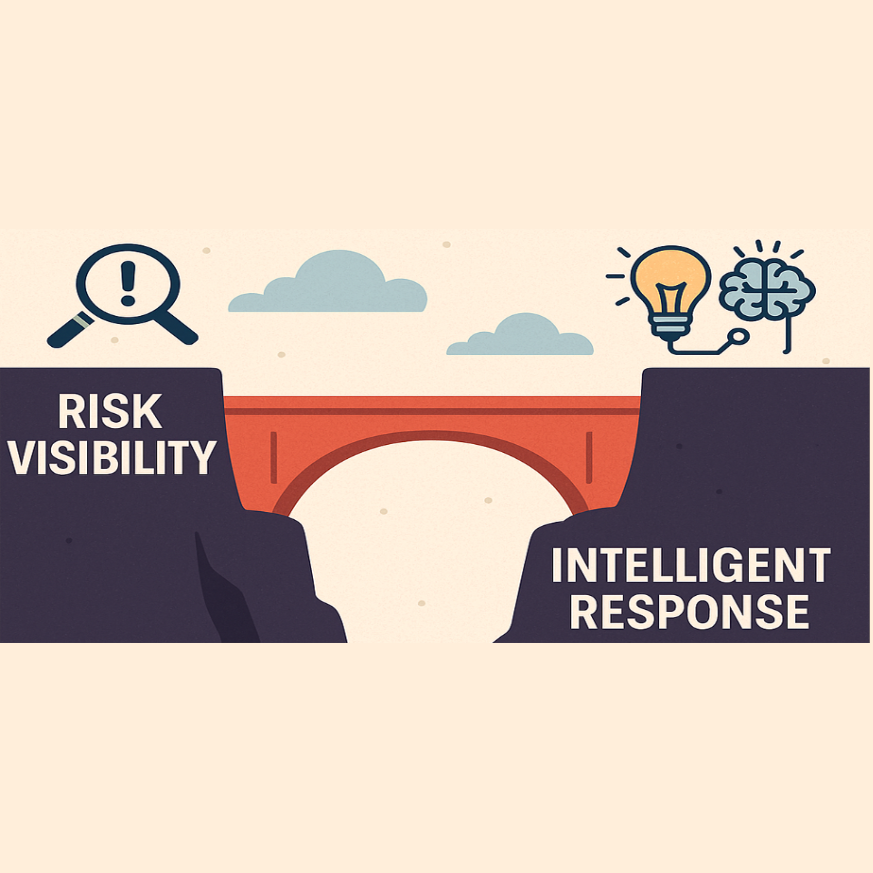
How CyberNEMO is bridging the gap between risk visibility and intelligent response
In today’s hyperconnected world, Europe’s critical infrastructures (CIs) — energy, transport, healthcare, and manufacturing — form the backbone of our digital society. Yet these same systems are among the most vulnerable targets.
From ransomware attacks that paralyse hospitals to supply chain breaches rippling through industrial control systems, one reality stands out: we cannot defend what we cannot understand.
Why Vulnerability Mapping Matters
Traditional vulnerability scanning stops at detection — identifying weak points without explaining how they might be exploited. But true cyber resilience requires context.
By mapping vulnerabilities to the MITRE ATT&CK framework — the global reference for adversarial tactics, techniques, and procedures (TTPs) — defenders can see how attackers think and operate. Each vulnerability becomes a narrative of potential attack paths, not just a static CVE entry.
By correlating technical weaknesses (CVE/CVSS) with ATT&CK techniques, CI operators can:
- Prioritise what matters most — focusing on vulnerabilities exploited by active adversaries.
- Enhance detection logic — linking vulnerabilities to ATT&CK techniques like privilege escalation, lateral movement, or data exfiltration.
- Enable AI-driven threat prediction — modelling how small weaknesses could evolve into full-scale attack chains.
Embedding AI Closer to the Threat Surface
CyberNEMO’s approach brings AI intelligence directly to the edge, transforming how vulnerabilities are monitored and analysed in distributed systems.
By embedding AI in IoT gateways and edge devices, threat detection becomes continuous, adaptive, and privacy-preserving. These local models evolve with each new observed attack, strengthening defences autonomously and enhancing cross-domain resilience.
This shift — from centralised analysis to distributed intelligence — is key to protecting the complex, hybrid environments that define modern critical infrastructure.
From Zero Trust to Full-Stack Protection
As CI systems increasingly span IoT–edge–cloud architectures, the attack surface expands. MITRE ATT&CK provides a shared taxonomy for identifying and analysing threats across layers — whether it’s an IoT device communicating with a suspicious domain (ATT&CK T1071) or an insider escalating privileges (T1068).
When integrated with Zero Trust principles, ATT&CK mapping enables defenders to:
- Dynamically verify every entity and data flow.
- Feed contextual intelligence into security enforcement engines.
- Apply risk-based adaptive access control, tightening security automatically when certain attack techniques are detected.
Together, these approaches move organisations from reactive defence to proactive, intelligent protection.
Collaboration and Knowledge Sharing
Mapping vulnerabilities to MITRE ATT&CK isn’t just a technical process — it’s a collaborative intelligence effort.
CyberNEMO is shaping a distributed European sharing platform that empowers CI operators, CERTs, and CSIRTs to:
- Exchange ATT&CK-aligned threat data in real time.
- Maintain interoperability across domains and sectors.
- Strengthen Europe’s collective cyber resilience.
By aligning on a common threat language, Europe’s CI defenders can respond faster and smarter — together.
Building a Culture of Cyber Sustainability
Ultimately, mapping vulnerabilities to MITRE ATT&CK helps organisations do more than just patch; it helps them learn, adapt, and evolve.
By connecting the technical (AI, Zero Trust, machine learning pipelines) with the human (awareness, collaboration, and shared intelligence), CyberNEMO fosters a culture of cybersecurity for sustainability — one that endures and grows stronger over time.
The Path Forward
CyberNEMO’s work on vulnerability-to-ATT&CK mapping marks a crucial step toward AI-empowered, collaborative cyber defence across Europe’s critical infrastructure.
It bridges the gap between visibility and action, turning fragmented vulnerability data into a living intelligence fabric that evolves with every threat.
Because in this new era of cyber-physical convergence, context is the ultimate defence.